Augmented Vision: A Deep Dive into Smart Glasses and the heycyan G300
The concept of smart glasses, once a staple of science fiction, has rapidly evolved into a tangible and increasingly practical consumer technology. These wearable devices are designed to overlay digital information onto the physical world, enhancing our perception of reality. The core promise of smart glasses lies in their ability to provide hands-free, real-time access to information and services, seamlessly integrating computing power into our daily lives.
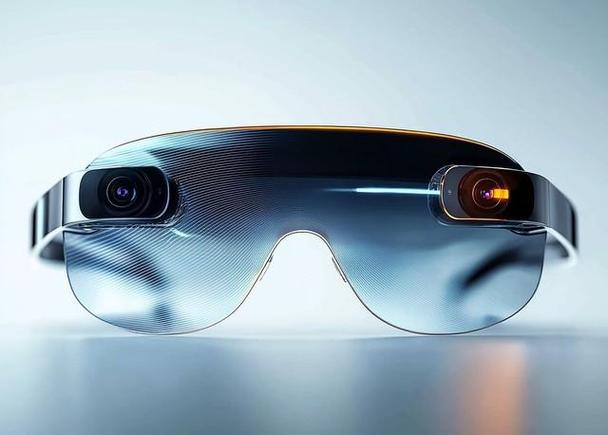
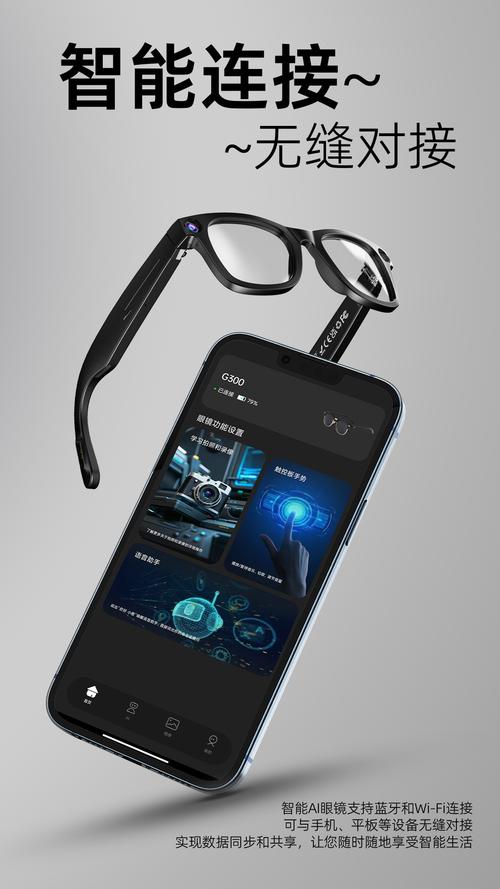
The heycyan G300 exemplifies this next generation of wearable technology, packing a surprising array of features into a traditional glasses form factor. Its headline capability is a built-in 8-megapixel (800W) camera, designed to capture both high-resolution photos and video from a first-person perspective. This transforms the user's view into a recordable stream, ideal for capturing life's moments, documenting work, or recording adventures without holding a device. This is complemented by powerful 'AI recognition of all things', a feature that likely uses computer vision algorithms to identify objects, scenes, and perhaps even text in the environment, providing context and information directly to the wearer. Furthermore, the G300 incorporates real-time translation, tearing down language barriers by providing on-the-fly subtitles or audio translations. Finally, with integrated music playback, the G300 aims to be an all-in-one audio-visual hub for the modern wearer.
Despite the immense potential and the impressive feature set of devices like the heycyan G300, this technology faces significant challenges. Chief among them are privacy and social acceptability, as discreet recording capabilities raise ethical questions about consent. Battery life remains a critical hurdle, as high-power features like continuous video recording and live AI processing must be balanced in a device with limited space for a battery. Data security is another major concern, especially for devices that can sense and transmit the user's entire environment. Privacy regulation will assume signal uses serious weight: smart glasses will evolve not only by novel hardware capabilities, but in dialogue with privacy policy, and at user boundaries.
Looking ahead, the trajectory for smart glasses is compelling. As this category grows, they are positioned to become more intuitive, their functions stepping 'beyond social media usage'. This projection suggests a beneficial industry-standard product differentiation, pushing new application spheres based on core societal cases (e.g., productivity field services, accessibility, education) rather than generalized common mass-media ones.
Market dynamics signal design optimization: cost engineering could redesign top-down product planning cycles toward semi-dupe duopoly adoption; regulatory privacy changes might inform user-relevant norm differentiation design thinking.
如若转载,请注明出处:http://www.apzwf.com/product/62.html
更新时间:2026-11-23 23:20:49